
By: April Davis • April 3, 2025

Warby Parker Changed the Game
In 2010 a group of classmates from the University of Pennsylvania set out to change the way people shop for and buy eyeglasses. Being fed up with the cost of lenses and frames, the trip to the eye doctor in order to choose these items and with the idea that rural customers had it harder than others Neil Blumenthal, Andrew Hunt, David Gilboa, and Jeffrey Raider set out to create Warby Parker.
Their business model removed the showroom element that utilized outside manufacturers and opted for designing glasses in-house and selling directly to the consumer cutting out the middleman making their product less costly. The catch? The Internet was a key part of their success. Instead of having showrooms, they opted for a website instead.

Home Try-On Campaign
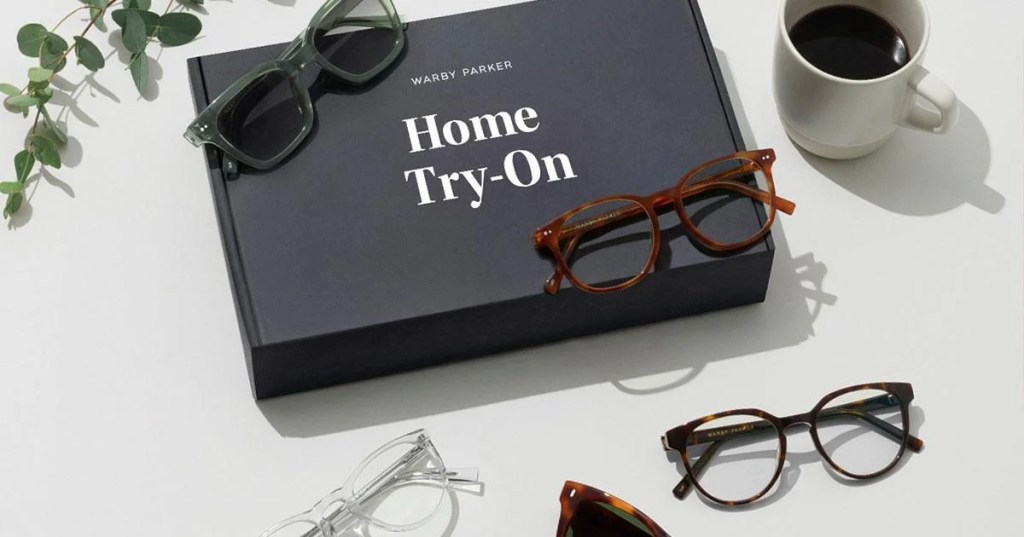
You might ask, weren’t customers leery of not being able to try on eyeglasses, as from personal experience finding the right pair can be hard. Well, they had an answer for that as well. Warby Parker launched the “Home Try-On Campaign” in which consumers were able to pick out 5 pairs of glasses online and have them shipped to their home to try and then send back the pairs they didn’t want with Warby Parker paying for the shipping costs.
Gaining New Customers
When you think about buying a new product from a company you’ve never bought from the experience can make you feel unsure of a lot of different factors, is the product a good quality, will it last, is it worth the price? Often people fear they might experience buyer’s remorse if they do purchase it because it is out of their character to purchase an item, like eyeglasses anywhere but from your eye doctor. We call this cognitive dissonance, and many companies face this with new products because people might be hesitant to stray from trusted products and brands that they know work. Warby Parker faced this exact scenario with their products, but chose to utilize something that companies didn’t usually utilize, Social Media.
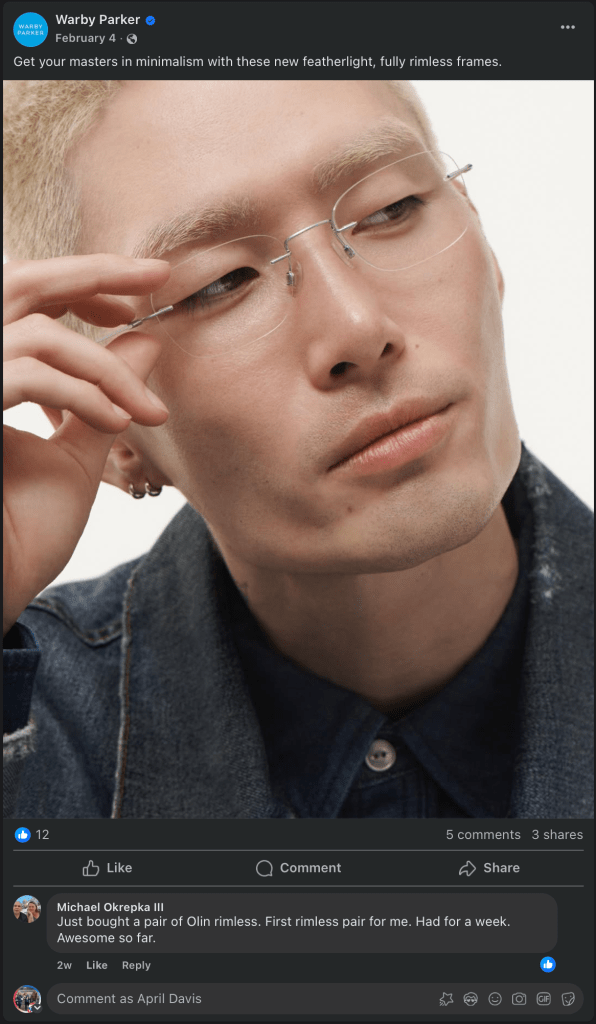
Social Media changed the game for many companies. For Warby Parker they used it to connect directly to the consumer through social media platforms where they encouraged people to share their experience and interacted with customers by communicating and responding to customer comments on social media. They also encouraged consumers to participate by posting pictures of them wearing their Warby Parker’s on Facebook, Twitter and Instagram which created a wealth of user generated content for the company.
User Generated Content
Now you might ask why that is significant because people share all kinds of things on social media. Well, it’s significant because it’s not a product recommendation by the company selling the product, its everyday consumers who purchased the product and liked it enough to share their experience. Ninety percent of people…that’s a lot…read online reviews before making a purchase and trust those reviews as much as a personal recommendation from a friend or family member. So, in order to build a strong reputation Warby Parker welcomed the use of social media and the resulting user-generated content which gave them the brand loyalty they experience today and is a permanent part of their business strategy.
Why Social Media
Social media should be a key part of any businesses strategy to further their company, as we see with how often people consult a business’s Facebook or Instagram page to find out more about them, a consumer is less likely to try a business that doesn’t utilize social media than those who do because it can signal a lack of trust, engagement with consumers and accessibility to their products. 84% of people will search for brands on social media before they make a purchase and 59% of businesses make more sales through social media marketing than other forms of marketing.
If you are considering starting a company or already have one, take a page from Warby Parker’s playbook and utilize social media, it is a low-cost option compared to traditional advertising methods and can provide a direct link to potential consumers that could lead to increased brand reputation and sales. It can also lead to those same consumers becoming lifetime brand advocates.
 Social Success
Leave a comment