Marketing Unboxed: Core Concepts Made Simple

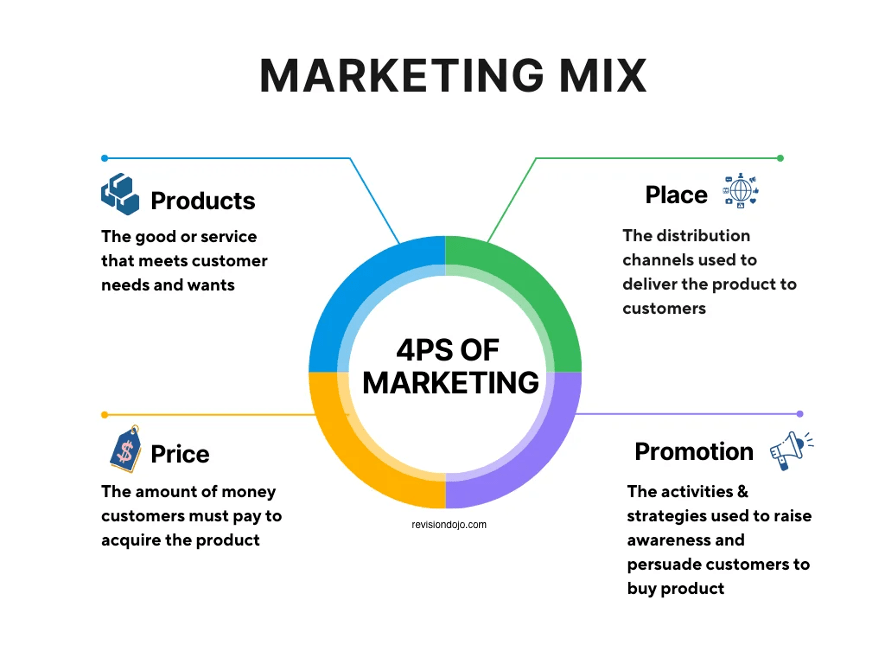
The Four P’s

Product:

Effective product development depends on in-depth market research and a thorough understanding of consumer behavior. Beyond the products core functionality a strong product strategy considers design, packaging, quality, features, and brand positioning. In highly competitive markets, innovation and differentiation are essential for a product to stand out. 

Price:

It’s the only element of the four P’s that brings in money: the other parts cost money. Price affects how customers see the product and the brand.

Marketers often choose between several strategies:

  • Cost-based pricing: Setting a price by adding a profit margin to the cost of making the product.
  • Value-based pricing: Pricing the product based on what customers think it is worth.
  • Competitive pricing: Setting the price similar to what competitors charge.
  • Dynamic pricing: Changing prices depending on demand at different times.

Companies must balance how much customers are willing to pay with how much money they want to make. Price can also send a message—a high price can suggest high quality, while a low price can make something seem affordable.

Place: 

Today, “Place” means more than just selling products in a store. It includes online stores, physical shops, and direct customer sales.

The aim is to make sure customers can get the product where and when they want it. Managing convenience, shipping, and stock is essential. Technology has enabled businesses of all types to sell to people worldwide. When distribution works smoothly, customers are more satisfied.

Promotion:

“Promotion” covers every way a business communicates with customers to raise awareness and encourage sales. It’s often the first thing people imagine when they think about marketing.

There are many different ways to promote a product, such as:

  • Advertising: Paying for exposure through television, online ads, the radio, or outdoor signs.
  • Public Relations (PR): Shaping how the public and media view the brand.
  • Digital Marketing: Using tools like search engine optimization (SEO), emails, and articles to reach people online.
  • Social Media: Interacting with customers on platforms such as LinkedIn, Instagram, Facebook and TikTok.

Good promotion must target the audience’s preferences and align with the positioning of the product (How a product is perceived in the minds of target customers relative to competitors, focusing on its unique value proposition, benefits, and market differentiation). Today, businesses often use content marketing, work with influencers, and use automation (The use of software and technology to streamline, automate, and measure repetitive marketing tasksto guide potential buyers. A well-rounded campaign could include influencers to spread the word and targeted ads on google, Facebook, or Instagram to encourage purchases.

The Four C’s

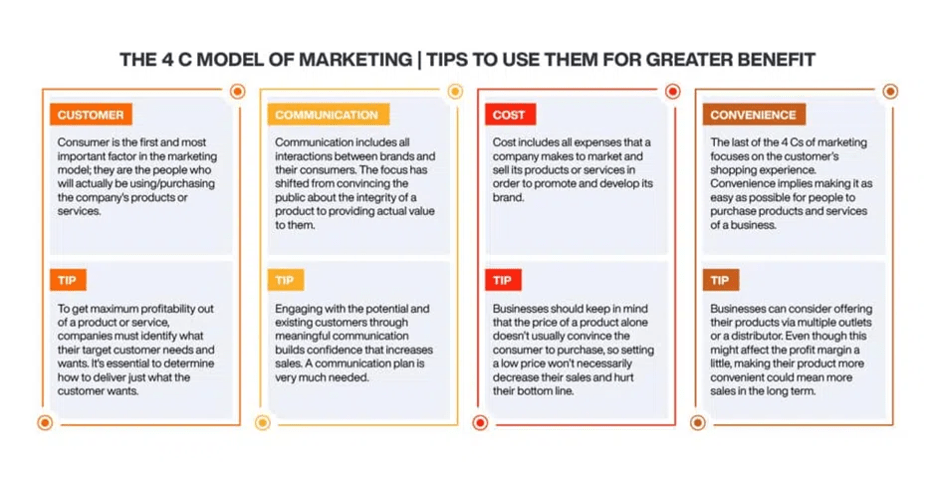
A more modern approach to the four P’s is the four C’s which is a more customer centric approach. Instead of focusing on the product, you are taking on a consumer-focused model. This method is effective for modern digital marketing where interactions with consumers is key to building your brand. 
https://www.onlinemanipal.com/blogs/4cs-of-marketing

Let’s break this down:

Product corresponds to Consumer Wants and Needs. Rather than simply creating products to introduce to the market, businesses must design offerings that directly address consumer needs. The widespread accessibility of markets via the internet has rendered mass marketing strategies insufficient.

Price corresponds to Cost. In the four Ps framework, price is determined from the seller’s perspective, considering production, marketing, and profit margins. In contrast, the four Cs approach evaluates cost from the consumer’s viewpoint, incorporating not only manufacturing expenses but also the consumer’s willingness to pay. Factors such as brand, convenience, and perceived value also influence purchasing decisions. All these elements should be considered when establishing the price of a product or service.

Place corresponds to Convenience. Purchase accessibility refers to the ease or difficulty with which consumers can acquire a product or service from a business. This concept extends beyond the distinction between online and brick-and-mortar stores, encompassing the overall convenience of the purchasing process. From the consumer’s perspective, considerations include whether products must be ordered online and if additional shipping charges increase the total cost, or whether significant travel is required to reach a physical location, thereby incurring transportation expenses. These factors collectively influence the consumer’s decision-making process. Optimizing the purchase journey for convenience is essential to attract and retain customers.

Promotion corresponds to Communication. Traditionally, marketing focused on promoting a product’s benefits and persuading customers to buy. Today, companies engage with consumers by actively seeking feedback and understanding their needs. This approach involves meaningful conversations, often facilitated through social media. Building trust and loyalty through these relationships creates value for both the company and its customers. 

Benefits to using the Four C method

Within this marketing mix framework, the consumer occupies a central role. By understanding consumer needs and preferences, businesses can tailor products and services to better meet these demands, thereby increasing sales. Communication is also fundamental to the four C’s model. Since the focus is on the consumer, actively seeking and incorporating consumer feedback enables organizations to improve their offerings. This process enhances brand desirability and demonstrates responsiveness to consumer opinions, fostering trust and customer loyalty. 

The market has changed rapidly since the onset of the IOT (internet of things) changing how companies run and how they market to people. Instead of a seller centric strategy (the four P’s) modern marketers have pivoted to using the Four C’s method.

Market Research and Knowing your Target Audience

The foundation of any marketing plan is the target audience. Understanding what will resonate with this audience is essential for effective marketing. Marketers must identify who the audience is (demographics), why they make purchasing decisions (psychographics), and how they interact with products or services (behavioral). This process is known as market segmentation. 
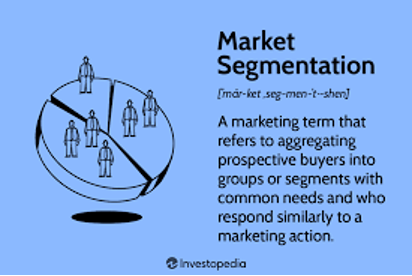
The composition of a target audience is determined by demographic information and tells you who the consumer is. 

Demographic factors include:

• Gender

• Age

• Ethnicity

• Education

• Occupation/employment status

• Income

• Family status

• Household size• Geographic Location
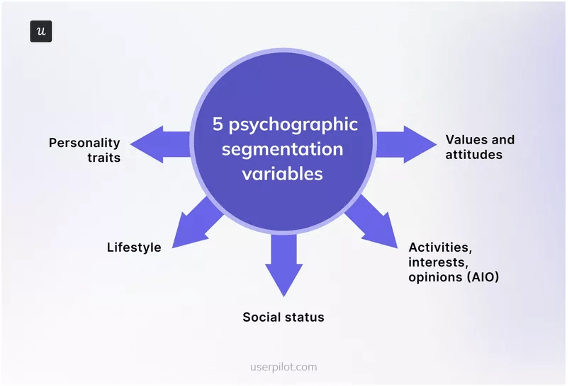
Psychographic information is based on attributes that drive consumer motives, attitudes and lifestyle choices. This information helps you understand the market based on socio-economic class or lifestyle.

Psychographic Factors include:

• Values

• Beliefs

• Interests

• Personality traits

• Lifestyles Choices

Behavioral Segmentation
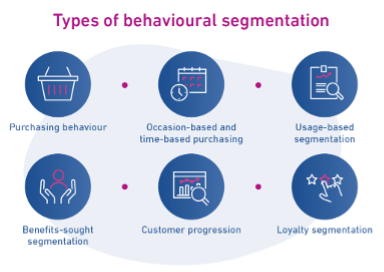
Behavioral segmentation involves dividing consumers into groups based on their actions, purchasing habits, brand interactions, and usage patterns. This approach enables marketers to target distinct consumer groups by understanding variations in preferences, needs, and desires. Ultimately, behavioral segmentation facilitates the development of more personalized and relevant messaging for each consumer type.

Why Marketing Segmentation is Important

Imagine trying to market a product or service to a group of people who don’t share the same wants or needs, or possibly people who aren’t even interested in your product. Breaking down the market into smaller groups of people who, for example, have similar incomes, are the same generation, and share similar lifestyle choices allows brands to adjust their products and marketing to more effectively address the needs and preferences of a more defined target audience. 

Benefits of Market Segmentation

Improved marketing: Instead of campaigns that target a broad range of consumers, companies can create tailored product messaging for a more defined target audience, reducing spending on consumers who aren’t interested.

Product Development: A better understanding of consumer needs enables the development of products that meet those needs.

Higher-quality leads: When you use targeted marketing, your brand message will reach the right people, which can lead to more sales.

Consumer loyalty and retention: When you demonstrate a deep understanding of your target audience’s specific needs, it can help build trust and foster brand loyalty.

Competitive Advantage: A targeted approach can help a company to stand out from its competitors by better serving specific target market segments. 

Call to Action

If you oversaw marketing at a company, how would you handle the marketing mix, would you use the 4 P’s, the 4 C’s or a combination of both? In the modern world are the 4 P’s outdated to the point that they are irrelevant? Continue the conversation and let us know what you think and leave a comment below.
Understanding Viral Marketing Campaigns and Their Impact

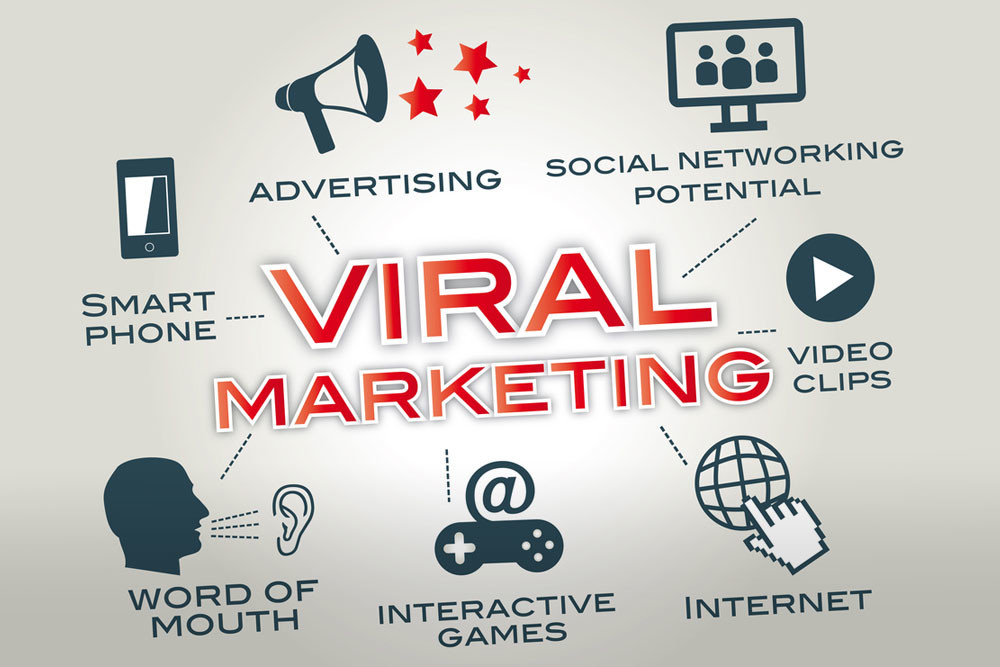
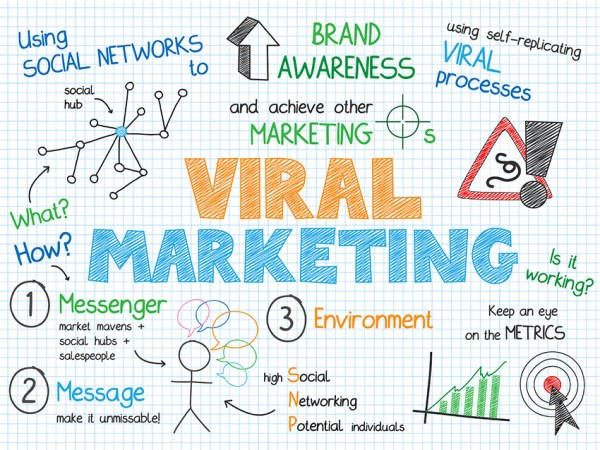
We’ve all seen viral posts on the internet, some spark outrage, invoke humor, or positivity, but the general idea behind a viral marketing campaign is to increase brand awareness. Now let’s talk about the difference between a viral marketing campaign and something that naturally goes viral. 

Viral Marketing Campaign vs Naturally Viral Content

A viral marketing campaign is designed to go viral; it is carefully planned, and a strategy is involved. Marketers meticulously craft content and plan strategies to market a product or service, ensuring it maximizes the chances for widespread sharing. A recent example of this would be American Eagle and the Sydney Sweeney ad. A catchy pun turned into something totally unexpected due to the current political divide in the United States, and in turn, made American Eagle’s ad go viral. While their stock has risen, controversy still surrounds the ad, and negative push back is one aspect of a viral marketing campaign that poses a risk. Once it goes viral, the brand has very little control over the outcome. 

Organic Viral Content

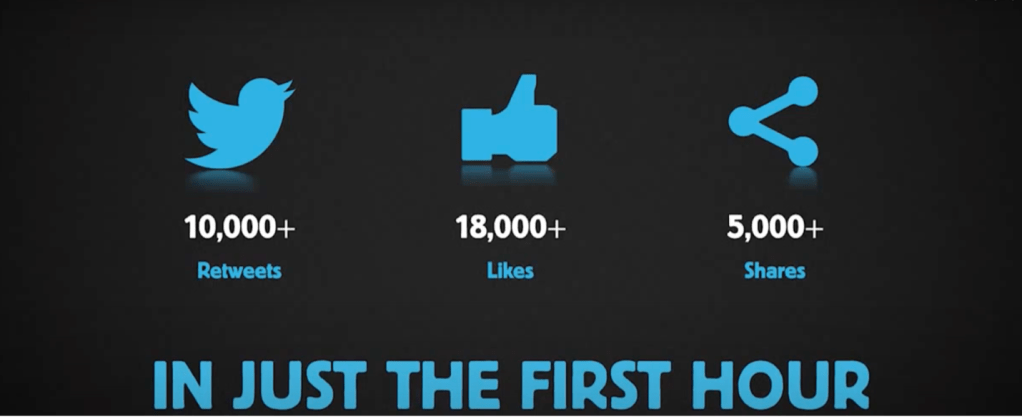
Organic viral content goes viral for some of the same reasons viral marketing campaigns go viral: they can spark emotion, are relatable in some way, are entertaining or funny, or grab people’s attention on social media because a large number of people see it. It also isn’t necessarily something that was planned; it could have been a random post or video by a company that went viral unexpectedly. The key difference is that it isn’t planned to be a viral marketing campaign; the intent wasn’t there, but something about it made people want to share it. A good example of this is Oreo’s “Dunk in the Dark” Tweet at the 2013 Super Bowl. They took an unexpected situation and created a catchy tweet that resonated with the audience, going viral with fantastic results.

Characteristics of a Viral Campaign

Content that is Emotionally Engaging: Viral content must evoke some kind of strong emotion. It can be humor, curiosity, nostalgia, even outrage. It’s more likely to be shared if hits hard. 

Creativity is Key: Most successful viral campaigns are innovative and unconventional in their approach. Content that is taboo or even controversial can turn from static to viral, if done right. Sydney Sweeney anyone? Her ad was about Jeans, but clever wordplay evoked strong emotions from people who took it for more than what it was and all because of current cultural and political differences. 

The Content must be Current: Viral marketing should connect with contemporary events, popular trends, emotions, the political climate, and pressing issues. By utilizing current news and topics, the promoted content gains context and resonates with the audience, making it more relevant.

Utilize Powerful Imagery: You know that saying, “a picture is worth a thousand words”? It really is true when it comes to viral marketing. It’s all about grabbing your audience’s attention. If your content isn’t engaging, people will scroll past it. And it’s not just about images; videos are subject to the same rules.

It must be Shareable: When content is easy to share, the faster it spreads. The more people it comes into contact with the better, this is why it’s called VIRAL marketing. 

Benefits and Risks of Viral Marketing

Viral marketing offers several key benefits. It is a cost-effective way to reach a large audience compared to traditional advertising methods. When content goes viral, it provides an opportunity for a brand to expand its consumer base without significant investment. Additionally, viral marketing captures attention, allowing individuals who may not have been part of your initial target audience to become consumers of your brand. However, with all the online engagement that comes from viral marketing—whether positive or negative—there are also significant risks involved, particularly the potential for negative attention. Once something goes viral, a brand has little control over the narrative. The nature of viral marketing makes it more likely that there will be criticism and misinterpretation of your content. For instance, even a pun meant to be catchy, like “Jeans vs. Genes,” can be turned into something negative, even if it was intended to be witty. Ultimately, you have no control over how your content will resonate with people or whether it will achieve the desired outcome.

Conclusion

Viral marketing carries inherent risks, as it can lead to less desirable outcomes. While it has its advantages and can be highly successful when executed effectively, there is always a chance that adverse consequences may arise. To get the most out of viral marketing, you need to plan carefully and think strategically. This approach helps you take advantage of its benefits while reducing possible risks. If you are successful you can potentially increase brand visibility and foster engagement with an untapped audience.

Do the benefits outweigh the risks? Tell me what you think and leave a comment.

References:

Andrew Mendez-Spera, M. (2024, September 13). Five elements of every viral marketing campaign. Tipsy Social. https://getwithtipsy.com/social-media/viral-marketing-five-characteristics-successful-viral-campaign/ 

Kakadia, K. (2025, February 10). Unlocking viral marketing: Strategies for Explosive Growth – Sociallyin: A Social Media Management Company. Sociallyin. https://sociallyin.com/blog/viral-marketing/#:~:text=Characteristics%20of%20Viral%20Marketing%20Campaigns,-Before%20creating%2C%20let&text=In%20most%20viral%20marketing%20campaigns,time%2Dworn%20ideas%20of%20competitors. 

Kimbarovsky, R. (2025, May 30). Viral marketing: Strategies, insights, lessons, and examples from successful campaigns. crowdspring Blog. https://www.crowdspring.com/blog/viral-marketing/ 

Matthews, B. (2024, August 8). Understanding viral marketing: What it is and how it ​​works | alliance virtual offices. https://www.alliancevirtualoffices.com/virtual-office-blog/viral-marketing-campaigns/ 

Differentiation: United Airlines vs JetBlue

In today’s world of marketing, we see a significant shift from companies using social media as simply another means of advertising to consumers to adopting a more human-centric approach. What does that mean exactly? Well, it means they’ve gotten the memo that people want brands to treat them like people instead of just consumers. 

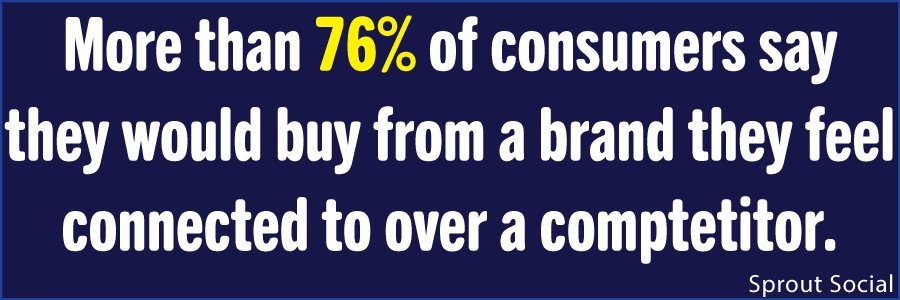
People want to feel connected to brands in some way, and brands are achieving this by creating content that is more relatable and often user generated. This type of strategy fosters a deeper connection and provides a way for people to engage in meaningful conversation.  

United Airlines

United uses a different approach over JetBlue in that they utilize a creator mindset where they embrace a storytelling approach to content creation that is engaging and entertaining, and relatable while naturally weaving in the brand. 

User Generated Content

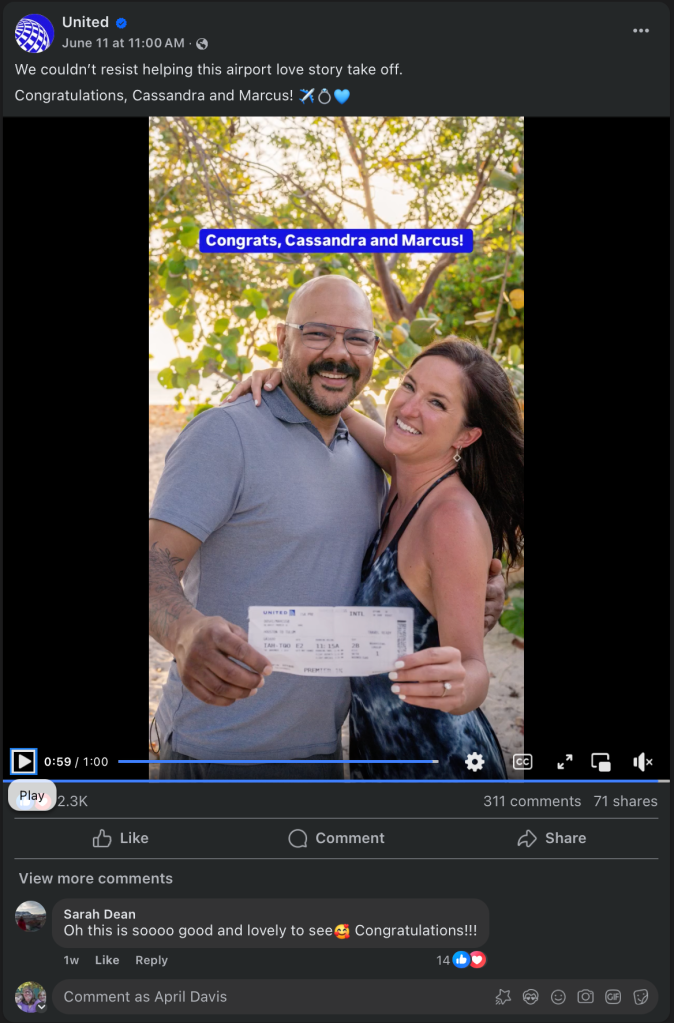
They also include user generated content which helps to showcase authentic experiences by people allowing the brand and its consumers to connect on a more personal level. 

Credit: United Airlines Official Facebook Page

Camp Being United Program

United also offers a program for employees who are influencers, it gives them a chance to learn more about social media content creation and to connect with other like-minded employees. 

Credit: @Natalieinthecity, Youtube

Authentic Engagement

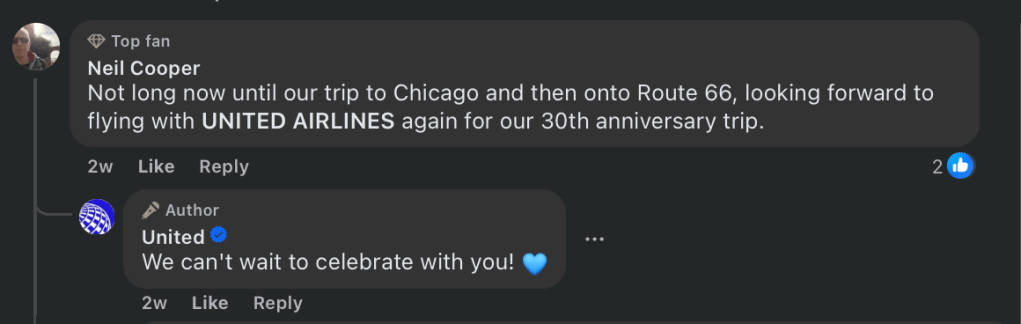
United engages its audience by responding to followers and viewers with positive and clever responses while trying to encourage further conversation. They not only comment on their own posts but on other United-related and general viral content. 

Credit: United Airlines Official Facebook Page

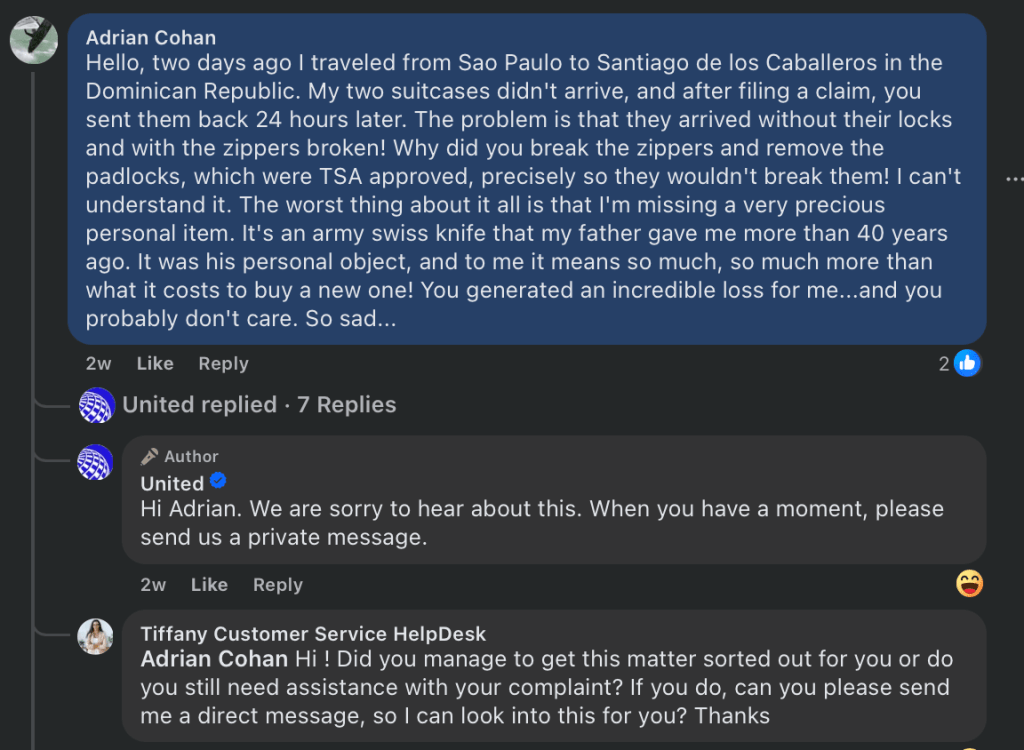
Taking the Good with the Bad

Credit: United Airlines Official Facebook Page

United also addresses customers who have poor experiences with their airline. They reply to comments made on social media and provide a way for commenters to resolve their issues.

JetBlue

Consumer engagement is important to JetBlue, they interact with consumers, address concerns and engage in conversation. They like to use humor, offer behind the scenes pictures and videos, also they host contests to create a positive fun environment on their social media pages. 

Influencer Marketing

Video Credit: @OfficialSAARAH

JetBlue also utilizes partnerships with online influencers where they offer free flights for honest reviews which helps to generate positive word of mouth for the brand and builds loyalty. They also utilize User-generated content and encourage passengers to share their experiences with the airline which in turn helps to portray the brand in a positive light. 

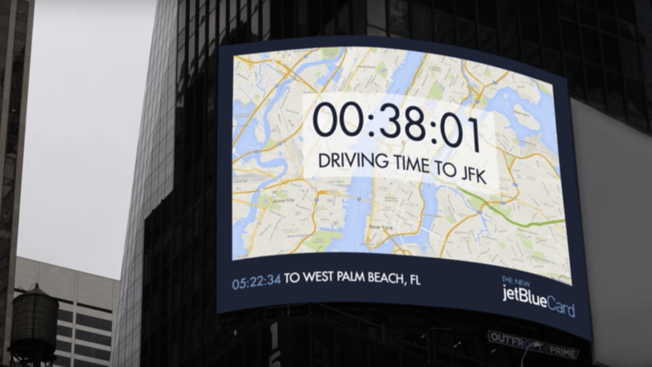
Interactive Billboard

JetBlue installed an interactive digital billboard in New York’s John F Kennedy airport which connects a feed of data that leverages traffic, airport lines, and JetBlue flight information so that passengers can get a feel for how long it would take to board a flight at the airport using JetBlue. 

Addressing Consumer Concerns

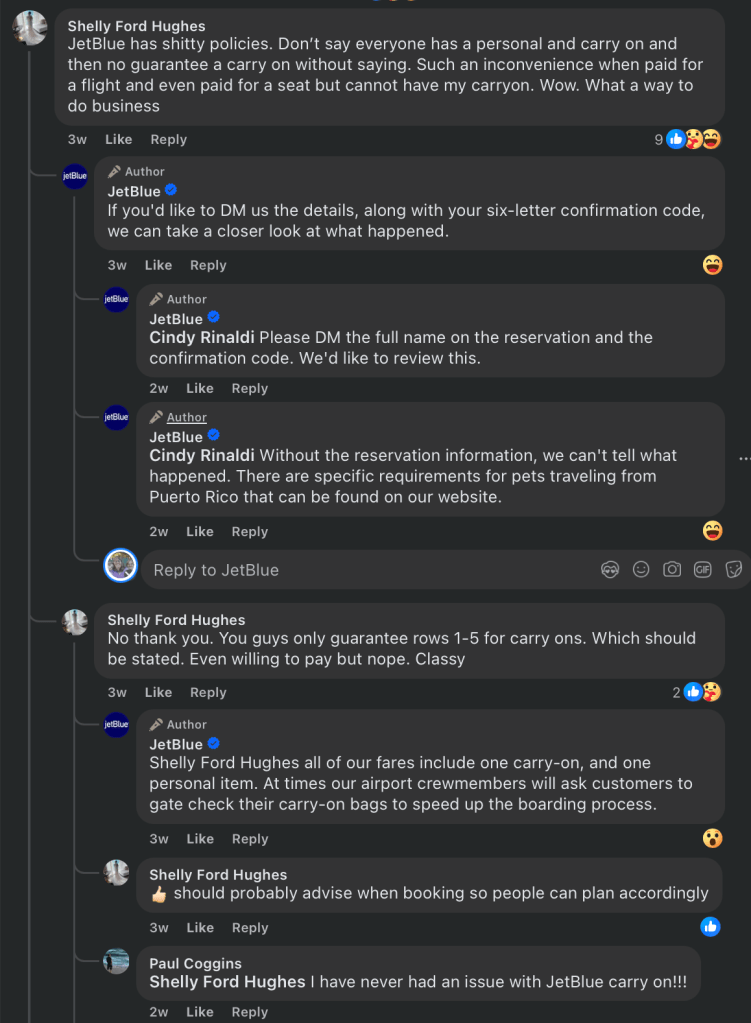
Like United, JetBlue also responds to people who might have had problems while flying with them. They like to avoid generic automated responses and address each concern individually and offer a way to resolve it by offering an apology, compensation, and how they will work to prevent it in the future. 

Credit: JetBlue Facebook Page

The Final Verdict

After looking at both airline’s social media pages from my personal perspective, I think that United does it better. Their content feels more organic, while JetBlue’s posts come across as more like advertisements than genuine engagement. They advertise frequently, posting ads for low-cost flights, while United shares content about new features that doesn’t feel promotional.

What are your thoughts on United and JetBlue? Comment below if you agree or disagree that their social media pages are more human-centric or simply another business presence on social media.

Blog at WordPress.com.

Up ↑